Author Archives: Sharon Wood

About Sharon Wood

Sharon Wood, aka NuttySupplier, launched the forum at SupplyBag.co.uk in 2005 whilst on supply. Having worked as a primary teacher for too many years, I chose supply teaching as a career, in order to achieve a good work / life balance.

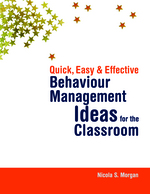
Quick, Easy and Effective Behaviour Management Ideas for the Classroom – Nicola S. Morgan

Article submitted by Nicola S. Morgan, Author

‘Throughout my 13 years experience as a teacher I have specialised in behaviour management in primary schools. The book is based on my years of experience teaching and managing a range of challenging behaviours in the classroom, the book provides practical and do-able strategies that work and includes worksheets, rewards and other fully photocopiable resources. The ideas are all based around an original framework developed by myself called The 10 Rs for Behaviour Management. The 10 Rs is a term for a group of strategies that are efficient ‘tried and tested’ techniques for managing children in the classroom, no matter what the behavioural difficulties are. They aim to prevent the occurrence of behaviour difficulties, or if problems do occur, they show how to quickly re-establish appropriate behaviour.
The behaviour management ideas and resources in this book will provide invaluable practical support for teachers, learning support assistants, teaching assistants, trainee and NQT teachers.

Behaviour Management Ideas for the Classroom - Nicola S Morgan

Purchase a copy of Nicola’s book here.

Where next? There’s a great quick read here on Reception class lesson plans. Check out our resources area here too.

Be a Better Supply Teacher – Liz Rhodes

Article submitted by Liz Rhodes, Author

I looked at many primary supply teacher books, but none of them provided quite what I wanted. You don’t need loads of lesson plans (you can always get those from the Supply Bag, as mentioned in the book!). You do need information on how to go about getting work and legal and financial bits; if you’re an NQT looking for a permanent post you need to know about the school day and the various pitfalls your college haven’t told you about (because they don’t know). If you are an older teacher, you need details of the ways in which the four rules of number are taught today (radically different from the old ways, and much better).
So all these things are included in my book, along with suggestions for behaviour management, working with other adults in the classroom and how to maintain your life/work balance. I don’t actually pack your bag for you (sorry!), but I do give you a list of things you might need. It’s in a handy pocket-sized format (12 x 17 cm) and is part of a series by different authors on a variety of educational subjects.
There’s just one problem – if the book is successful, I could be doing myself out of a teaching job. Ah well, I can always take up my new career as an author!

Be A Better Supply Teacher - Liz Rhodes

Liz’s book is available on Amazon.

Teaching your own child – Sarah Cruickshank

Challenge, nightmare or enjoyable experience?
How are you to cope when you arrive at school to be told that you will be teaching your own child’s class? It is quite a challenging situation, you may feel apprehensive, will you treat your child differently to the other? Your initial worry may be that you’ll be too soft on your own, but you are more likely to be much harder on him/her.
Remember too that your child might feel strange about you being in front of the class.
The class are likely to know you as X’s parent and indeed, many of them might have visited your home and be used to calling you by your first name.
When you enter the classroom, you must make it clear from the start that whilst some of the children may have spent time with you in your house, you are now their teacher and they must treat you as such. Ensure that they understand that you will not be visiting undue favouritism on your own child, nor will you accept standards of work that they would not submit to their regular teacher.

Teaching your own child

Challenge, nightmare or enjoyable experience?

Make sure that your own child knows that whilst you are working, they cannot be the centre of your attention. Explain that you will expect him/her to act as they would if any other teacher was working with them. You will not be giving them any special privileges just because they are “your baby”.
As you are going to know exactly what your child has done for the period you are teaching, it is going to be difficult to ask the usual “what did you do at school today?” questions. Be sure to discuss the day and praise the positives.
Your child may be surprised that you are more strict or do other things slightly differently from their regular teacher. Reassure your son or daughter that in front of the class you are the teacher, but that outside school you are still their loving parent.
Treat the experience of teaching your own child as an opportunity to get a privileged insight into their education, an experience that most other parents are unable to enjoy. Use this experience to help/support your child and his/her regular class teacher to develop their knowledge and skills.
Teaching your own child can be a challenging and stressful experience, but one that can be enjoyable from time to time.

Article submitted by Sarah Cruickshank, Education Writer and Supply Teacher.

Where next? There's a great quick read here on CPD ideas for supply teachers.
Check out our resources area here too.

Support from your supply teacher agency

by Sharon Wood

Thinking of doing supply work through an agency? There are lots of things to consider when choosing a supply teacher agency. You want to have the confidence in them to get you work, and that, once in schools working, you will have their support, should you need it. At SupplyBag.co.uk, the essential resource for supply teachers, we are currently trying to catalogue agencies here, that offer a good level of support to their teaching staff.

Good day or bad day, let your recruitment agency know!

Support for supply teachers is an area in which supply teaching agencies can differ enormously, just as the amount of support teachers demand of them will.

As is written elsewhere on here, you can build up a relationship with your point of contact at the agency, which can be of great benefit day-to-day. Supply teaching can be an isolating role, and it’s nice to be able to call the agency to share your achievements and worries regarding the school day.

If ever you have a problem in a school, your supply teacher agency must be notified immediately. Then your teaching union. Your agency should have set, tried and tested procedures to work through in all instances, and, knowing the school and yourself, is best placed to advise you on how to proceed. Many teaching agencies, and most teaching unions provide legal support.

Where next? There’s a great quick read here on tips for working with a young family. Check out our resources area here too.

Feedback about your supply work

by Sharon Wood

SupplyBag.co.uk offers information and support to supply teachers through this website and its form. Here, we are discussing supply teacher agencies, and how important it is to receive feedback from them.

Teacher supply and recruitment agencies need to ensure a good working relationship with schools and teachers alike. They benefit greatly from referrals on both sides. Keeping lines of communication open with both schools and teachers helps to cement their relationship.

Monitoring placements is an essential part of the service agencies offer to schools and to teachers. They routinely call schools to ask for feedback following a placement, so try to make sure that the feedback about your supply work is filtered down to you.

Feedback information for supply teachers

Be a reflective supply teacher, always ask for feedback.

A word of warning: Don’t be surprised if the feedback isn’t what you expected! Schools are extremely busy places, with some extremely busy people in them. You can walk in, spend a day doing wonderful work, and walk out again not having seen another living soul above the age of 8! You may have only met the secretary, a dinner supervisor, or a TA, new to the job; it could be a few days before the class teacher is back in the classroom and sees your diligent marking and hears the children’s excited babbling about you! Is there any wonder that the feedback from an exhilarating day comes back pretty much neutral? Don’t be disheartened.

Where next? There’s a great quick read here on First call   teachers. Check out our resources area here too.

Call Times on Supply Teaching Assignments

by Sharon Wood

Supply teachers, whether working through supply teacher recruitment agencies, or working directly with schools, should expect early morning calls to work. Will the calls come at set times? How late will they come? Should a supply teacher call an agency and ask for work?

Being Called

Be prepared to be called at any time of day or night! It is reasonable to expect calls from your agencies anytime from 6:00am asking you to work that day.

Call Times on Supply Teaching Assignments

A call to work that day may come as late as 11:30am too, as teachers (slaves to the job that they are!) will often turn up for work when they really should be at home with Ibuprofen and TLC!

Times in the evenings that you will be called largely depends on your agency. Some would rather call you at 10pm, following a conversation with a school’s supply teacher / cover co-ordinator and give you a few hours notice about the work the next day than wait until the morning.

Calling Them

An awkward one to begin with. Do you call your agency and let them know you are free today, Friday, even though on Monday morning you called them to let them know you were free all week?
Yes! Especially if they know you work through more than one agency, they will not assume status quo after a few days.
If you are unavailable for supply, do let the agency know. If you’re already booked, and cannot make it, let them know as early as possible in the morning, so they can sort out someone else to teach.

More reading: Early Morning Calls – Supply Teaching by Sarah Cruickshank

What’s the earliest / latest call you’ve had with an offer of work? Let us know in the comments below!

Where next? There’s a great quick read here on contacting schools
Check out our resources area here too.

Questions to ask a potential supply teacher agency

Some supply teachers choose to approach schools directly and ask them for supply work. Others, especially in more built-up areas, work through agencies. Indeed, many schools will only work with agency teachers, so you may not have a choice! You do have to have confidence in your supply teacher agency however. Interview them, as much as they will interview you. You wouldn’t dream of accepting a long-term position in a school you had never visited before, and similarly, you should take care when signing up to an agency.

Look for a Quality Mark ‘Supporting quality supply teaching’ awarded by the Department for Education and Skills. However, do not be put off if an agency does not hold this award, it does cost to apply for one.

Rather than feel as though you’re choosing an agency, it may feel like they are actually choosing you. You may have to go through an interview process, will certainly have to have a CRB Check done, your QTS/qualifications/List 99 and DfE number verified, filed a medical report, and had professional references followed up. This can often be quite daunting, but they are all quite straightforward, and confidential, processes.

Many agencies provide optional Pension and Holiday Savings schemes. Ask if you are interested.
Check how the agency pays. Some pay weekly, while others monthly, in arrears too.

Questions to ask a potential supply teacher agency

Making the right choice about a supply teacher recruitment agency means asking the right questions.

Building a relationship

Many supply teachers find that the more they keep in touch with their agency, the more work is offered to them. It is not simply a case of your agency going through an alphabetical list of supply teachers in a morning, giving each a call until they find someone in the vicinity who is available to work. They need to maintain a good relationship with the schools, by offering quality, enthusiastic teachers… show that you are by calling. Call them to tell them you particularly enjoyed your time at Nitsville Juniors today, and, given positive feedback from the Head at Nitsville, they are more likely to match you up next time there’s work available.

Working through an agency generally means that you are responsible for your time sheets, both getting them authorised by schools, and getting them to the agency at the end of the week in order to be paid.

Tax and National Insurance contributions are deducted from your wage by your agency. If you work with more than one agency, you may have to nominate one as your main source of income for tax purposes. It is a good idea to give HM Customs and Excise a call soon after the end of the tax year and ask them to check through your tax details.

Where next? There’s a great quick read here on behaviour management ideas. Check out our resources area here too.

Continuing Professional Development for Supply Teachers

by Sharon Wood

SupplyBag.co.uk exists to support supply teachers. Here, we have many articles on how to get started as a supply teacher, and how to be a better supply teacher. It is in everyone’s interests for you to continually improve your performance in school.

As part of the Government’s commitment to raising the effectiveness of supply teaching the former DfES commissioned a set of self-study materials for post induction Supply Teachers in order to support their Professional Development.

The materials consisted of five books to enable independent study, but have since been lost into the ether.

The National Union of Teachers (NUT) offers a calendar of courses to aid in Continuing Professional Development, a good proportion of which are aimed specifically at supply teachers.

CPD for supply teachers

Most other teaching unions and associations offer CPD courses.  It is worth contacting your local supply teacher recruitment agency regarding CPD that they may offer.

The Supply Teacher offers a CPD course for supply teachers, focusing on increasing confidence, improving improvisation skills, developing professional relationships etc. It is a home study course, self-assessed, and includes a Certificate of Attainment. The course is priced at £20, and is available to supply teachers here:
http://www.thesupplyteacher.com/information/cpd-information/12-cpd-course-from-the-supply-teacher

Swansea University often offers Continuing Professional Development courses for supply teachers.

 Where next? There’s a great quick read here on Daisy the Donkey’s First Fare – Russ Brown
Check out our resources area here too.

Marking Work

by Sharon Wood

Having been a supply teacher for a number of years, I needed an outlet, and SupplyBag.co.uk is it! Advice, information, and support for other supply teachers, and here,  I take a look at the age old ‘do I or don’t I mark the work?’ issue.

Marking Work: Rule number 9 of my 10 Commandments is ‘mark the work’ and I have written some advice in that section. I believe marking to be an invaluable part of the teaching/learning process. What the children learn from/through you doesn’t end when they leave to go home. You probably average three lots of marking to do per day of teaching, which means three more opportunities to communicate with the child about their work.

Yes, many times it’s just a case of a tick and a mini-comment, but more often than not you will have both literacy and numeracy to mark. Do this as you would if they were your own class. As the children are often near strangers to you, you may feel it is difficult to mark their work effectively, but there is feedback you can give the children which is highly appropriate. The children need to know whether or not they have met the objective, if they exceeded it, where they can improve their work, that you were pleased with their contribution in class, how well they did against the lesson’s success criteria and perhaps what you would have expected to see if they were to rise to the next level.

Unless you are well-known to the school, and your handwriting will be recognised by many teachers, put your initials/name by the side of the marked work. This is especially helpful to schools when moderating, having OFSTED Inspections and on parents’ evenings. Mark neatly, in the same colour as the work is generally marked in, and try to follow the school’s individual marking scheme (ask for it in the morning!) as far as you are able with the information given.

Marking Work on Supply

Grab a cuppa, you could be marking children’s work for a while!

Many schools have their marking policies online. Knowledge is power: check the websites of the schools in your area.

Just as an aside, I once did a day of supply teaching in a new-to-me school, in a Year 6 class. They had been set: SATs papers for the day! English Writing before break, Maths Paper A after break, English Reading after lunch, then a PE lesson. And yes, I was expected to mark it all. I duly did, and was home by around 6:30pm. I didn’t mind at all, but what I did mind / find disturbing was that the teacher wasn’t interested in marking the work herself!

Where next? There’s a great quick read here on maths activities. Check out our resources area here too.

Following Lesson Plans

by Sharon Wood

Yes, planning will be left for you! Ok, maybe not. However, a supply teacher walking into a classroom to find no planning left is a rarity. We cover all sorts of issues facing supply teachers on this website, and the problem of illegible scrawls (or rather non-existent illegible scrawls!) is one of them. Following lesson plans accurately is critical, if they are left for you.

You will no doubt encounter a plethora of types of lesson plans as a supply teacher. The variety will range from nothing, to post-it notes on worksheets, to a timetable on the classroom wall, through to 3 A4 pages handwritten for each lesson.

If plans have not been left for you, find either a parallel teacher, or an SMT member and ask what is expected. You may find the children know their timetable, and will be able to tell you as much as you need to know to scrape by, but you should arrive at the school long before the children do, and therefore have plenty of time to prepare.

I have rarely gone into a school to find no prepared work. However, I do not use an agency, and 90% of my supply teaching work is pre-booked.

Following Lesson Plans - Advice for supply teachers

Lesson plans come in all shapes and sizes. If they are available – follow them!

I do find it amazing though that not all weekly lesson plans for a particular class are saved onto the school server somewhere. I was saving my weekly plans onto a shared file in the early 90’s, so SMT could check it, so the English and Maths coordinators could check their subjects were being covered/taught properly, so that the school had a definite record of subject coverage etc. for OFSTED, and so that if I wasn’t able to turn up to school through illness and they got a supply teacher in for the day, all the plans were available to them! (Rant over!)

You must follow plans that have been left for you. No matter what you think of them! If you make alterations to the plans, leave a full and detailed account of why and how you did this, relating it to the children’s learning as much as possible.

Glossary of Terms you may find on a lesson plan:

V/A/K – Visual/Aural/Kinesthetic learning involved in this lesson
IWB – Interactive Whiteboard used in this lesson
LO – Learning Objective
DLO – Desired Learning Objective
OBJ – Learning Objective
SC – Success Criteria
CN – Children
MA/A/LA – More able/Able/Less able
(Random Initials) Support – Support available from TA/HLTA/CS with those initials

[bctt tweet="Help! No planning left for me! #supplychat"]

Haven’t been left a lesson plan? Check out my homemade emergency lesson plans here.

Where next? There’s a great quick read here on Gemstone recruitment
Check out our resources area here too.